
How Credit Scores Work (and How to Raise Yours)
A plain-English guide to credit scores — what the number means, the five factors behind it, and practical steps to raise yours.
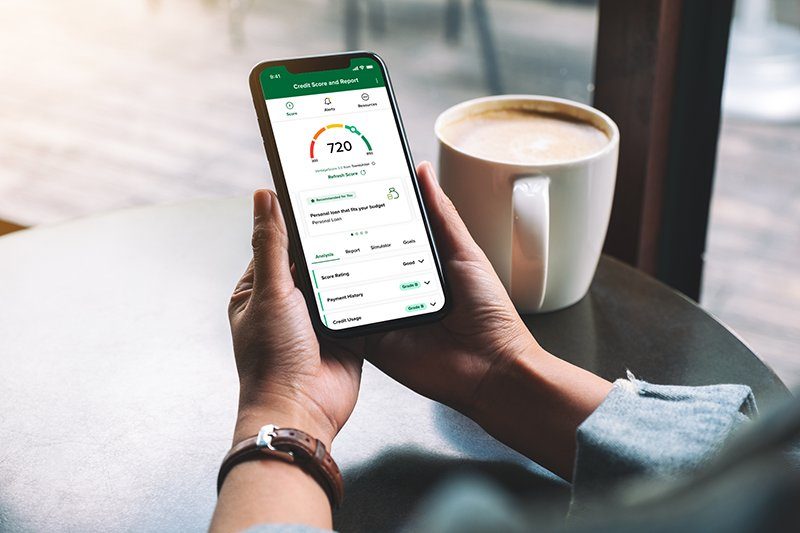
Your credit score is a three-digit number that follows you almost everywhere money is involved. Landlords check it. Car dealers check it. Employers sometimes check it. But for most people, the score itself is a mystery — a number that appears on an app, goes up and down for no clear reason, and never comes with an instruction manual.
This article is that manual. You'll learn what a credit score actually measures, the five factors that move it, what counts as a good score, and a set of practical steps you can start today to raise yours.
What Is a Credit Score, Exactly?
A credit score is a number — usually between 300 and 850 — that predicts how likely you are to repay money you borrow. Lenders use it as a shortcut. Instead of reading your whole financial life story, they glance at the number and get a quick sense of your risk.
There are two main scoring systems in the U.S.:
- FICO Score. Used by about 90% of lenders. This is the number most people mean when they say "my credit score."
- VantageScore. Used by many free monitoring apps and some lenders. It's calculated a little differently, so your VantageScore and FICO score won't match exactly.
Both scores pull their data from the same place: your credit reports, maintained by the three major bureaus — Equifax, Experian, and TransUnion. These reports are lists of your borrowing history: every credit card, loan, and collection account, along with how you've handled each one.
A score in the high 700s or above will get you the best interest rates. A score in the 500s or below means you'll pay more to borrow — or get turned down entirely. The difference is real money. On a $25,000 car loan, a borrower with a 750 score might pay around 6% interest, while a borrower with a 580 score might pay 14% or more. Over five years, that's thousands of dollars in extra interest.
The Five Factors That Make Up Your FICO Score
FICO scores are built from five ingredients. Each one counts for a set share of your score:
1. Payment History (35%)
This is the biggest piece. It answers one question: do you pay your bills on time?
Every on-time payment helps. Every late payment hurts — and the damage scales with severity. A payment that's 30 days late will ding your score; a payment that's 90 days late will hurt much more. An account sent to collections or a bankruptcy will hurt the most and can stay on your report for up to seven years (bankruptcies up to ten).
Example: Maya has two credit cards and a car loan. She's made every payment on time for three years. Her payment history is spotless, which is the single biggest reason her score is 760. One 30-day late payment on one card could knock 60 to 100 points off a score like hers.
The fix is simple but non-negotiable: pay every bill by its due date, every time. If you struggle to remember, set up autopay for at least the minimum payment on every account.
2. Amounts Owed (30%)
This factor looks at how much of your available credit you're using — especially on revolving accounts like credit cards. Lenders call this your credit utilization ratio.
Here's how it works: add up your credit card balances, then divide by your total credit limits. If you owe $2,000 across cards with a combined $10,000 limit, your utilization is 20%.
The general rule: keep utilization under 30%, and under 10% is even better for your score. High utilization signals that you're leaning hard on credit, which makes lenders nervous.
Example: Jordan has one card with a $5,000 limit. He charges $4,000 on it for a vacation and pays it off over a few months. While the balance sits at $4,000, his utilization is 80% — and his score drops even though he's never missed a payment. Once he pays it down to $500 (10% utilization), his score recovers.
3. Length of Credit History (15%)
Lenders like to see a long track record. This factor considers the age of your oldest account, the age of your newest account, and the average age of all your accounts.
This is why closing your oldest credit card can hurt your score — it shortens your history. If you no longer use an old card, consider keeping it open with a small recurring charge (like a streaming subscription) that you pay off each month.
Example: Sam is 24 and opened his first card at 19. His average account age is about 4 years. His friend Alex is 40 with accounts going back 20 years. All else equal, Alex gets more points here. There's no shortcut — this factor rewards patience.
4. New Credit (10%)
Every time you apply for credit, the lender usually makes a hard inquiry — a formal check of your credit report. One or two hard inquiries barely matter. But several in a short time can signal that you're desperate for credit, and your score will dip slightly.
Rate shopping for a mortgage or car loan is the exception: FICO counts multiple inquiries for the same type of loan within a 14-to-45-day window as a single inquiry, so you can shop around without penalty.
Example: Priya applies for three store credit cards in one month to get signup discounts. Each application adds a hard inquiry and lowers her average account age. Her score drops about 25 points. Six months later, with no new applications, most of that recovers.
5. Credit Mix (10%)
Lenders like to see that you can handle different kinds of credit responsibly — a mix of revolving credit (credit cards) and installment loans (car loans, student loans, mortgages). This is the smallest factor, and you should never take out a loan just to improve your mix. But if you already have a car loan and a credit card that you manage well, this factor works in your favor.
What Counts as a Good Score?
FICO score ranges generally break down like this:
- 800–850: Exceptional
- 740–799: Very good
- 670–739: Good
- 580–669: Fair
- 300–579: Poor
Most lenders consider 670 and above to be "good." The best rates and terms usually kick in around 740 to 760 and above. Below 580, your options get thin and expensive.
Keep in mind that your score is a snapshot, not a permanent grade. It moves as your report changes — sometimes within weeks. A 620 today can become a 700 within a year of consistent habits.
How to Raise Your Score: A Practical Action Plan
Raising your score isn't magic. It's a handful of boring habits, done consistently. Here's what actually works, in order of impact:
1. Pay every bill on time. Set up autopay for at least the minimum on every account. This single habit matters more than anything else.
2. Pay down high credit card balances. If any card is over 30% of its limit, make that your priority. Bringing a $3,500 balance on a $5,000-limit card down to $1,000 can move your score noticeably within one or two billing cycles.
3. Don't close old cards. Keep your oldest accounts open, even if you rarely use them. If a card charges an annual fee you don't want to pay, ask the issuer to switch it to a no-fee version instead of closing it.
4. Limit new applications. Only apply for credit when you actually need it. Space applications out by at least six months when possible.
5. Check your reports for errors. You're entitled to free weekly reports from all three bureaus at AnnualCreditReport.com. Look for accounts you don't recognize, wrong balances, or late payments that aren't yours. Disputing an error that gets removed can raise your score quickly.
6. Become an authorized user. If a family member has a long-standing card with a clean history and low balance, being added as an authorized user can add that positive history to your report. Only do this with someone whose habits you trust.
7. Ask for a credit limit increase. A higher limit lowers your utilization ratio without you spending less. Requesting an increase sometimes triggers a hard inquiry, so weigh that — and don't increase your limit just to spend more.
Myths Worth Ignoring
- "Checking my own score hurts it." False. Checking your own score is a soft inquiry and never affects it.
- "Carrying a balance helps my score." False. Paying your balance in full each month is best. Carrying a balance only costs you interest.
- "Closing a card I don't use helps." Usually false. Closing it can raise your utilization and shorten your history.
- "My income affects my score." False. Your score doesn't consider income at all — a high earner with late payments can have a worse score than a modest earner who pays on time.
This article is for education only and isn't financial advice.
Key Takeaways
- Your credit score (300–850) predicts how reliably you repay borrowed money; lenders use it to set your interest rates and approval odds.
- Five factors drive your FICO score: payment history (35%), amounts owed (30%), length of history (15%), new credit (10%), and credit mix (10%).
- Paying on time and keeping credit card balances low are the two most powerful moves — together they control 65% of your score.
- A score of 670+ is generally "good"; the best rates usually start around 740–760.
- Your score is a snapshot, not a sentence — consistent habits can raise it meaningfully within months.
- Check your free credit reports regularly and dispute any errors you find.
Keep reading
How Long Does It Take to Go From a 600 to a 700 Credit Score?
How long does it take to go from 600 to 700 credit score? Realistic timelines, a month-by-month plan, and the actions that move your score fastest.

How to Get Out of Credit Card Debt: A Step-by-Step Plan
Drowning in credit card debt? Follow this realistic step-by-step plan to stop the bleeding, cut interest costs, and become debt-free.

How to Build Credit From Scratch
No credit history? No problem. Learn the beginner-friendly tools and habits that build a solid credit score from zero.