
How Much Should a Single Person Spend on Groceries?
How much should a single person spend on groceries per month? See realistic 2026 grocery budgets by tier, the 10–15% rule, and 8 ways to cut your bill.
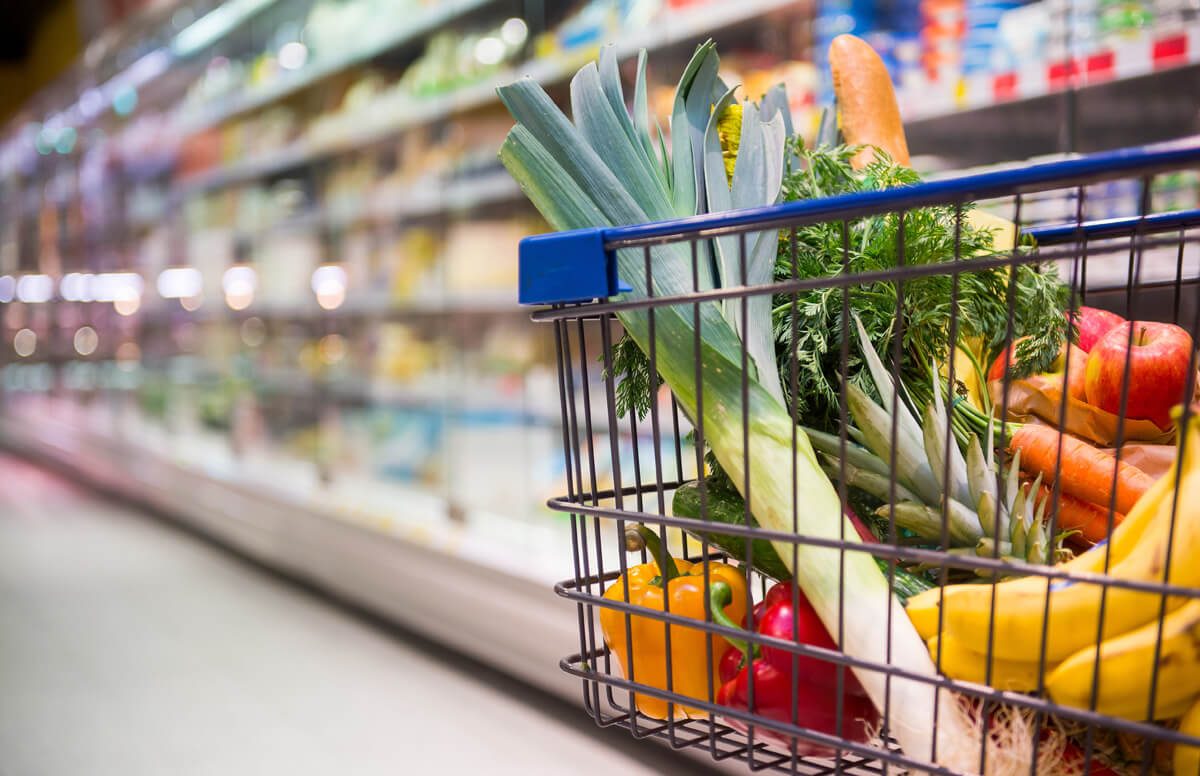
If you're wondering how much a single person should spend on groceries per month, you're asking one of the most useful budgeting questions there is. Groceries are the rare expense that's both necessary and flexible — you can't skip food, but you can easily spend twice as much as you need to without noticing.
The short answer: most single adults spend somewhere between $300 and $600 a month on groceries, with $350–$450 being a realistic middle ground for someone who cooks most meals. But "normal" depends on your income, your city, and how much you eat out versus cook. Let's break down what a sensible number looks like for you.
What a Typical Single Person Spends on Groceries
National spending data consistently shows food as the third-biggest household expense after housing and transportation. For one adult who mostly cooks at home, the USDA's Cost of Food at Home plans — the government's official monthly food-cost estimates — give the most useful benchmark. Below are 2026 estimates based on the USDA plans, adjusted for recent food-price inflation.
Monthly Grocery Tiers for One Adult (2026 Estimates)
| Plan | Monthly estimate | Who it fits | |------|-----------------|-------------| | Thrifty | $290–$330 | Tight budget; heavy meal planning, store brands, batch cooking | | Low-moderate | $380–$420 | Budget-conscious but flexible; mix of store brands and name brands | | Moderate | $470–$520 | Cooks regularly, buys fresh produce and meat without much worry | | Liberal | $580–$650 | Prioritizes organic, specialty items, or high-cost city prices |
These are estimates for one adult eating most meals at home — not restaurant spending, coffee runs, or delivery apps. A few things to keep in mind about this table:
- City prices matter a lot. Someone in rural Ohio can eat well on $320 a month; the same basket in San Francisco or New York might cost $500. The USDA numbers are national averages.
- The gap between tiers is lifestyle, not nutrition. The thrifty plan is nutritionally complete — the liberal plan just costs more because of preferences (organic, prepared foods, premium brands), not because it's healthier.
- Men and women differ slightly. The USDA publishes separate estimates; men in their 20s–50s tend to run about 10–15% higher than the numbers above due to higher calorie needs.
The 10–15% Rule: A Quick Reality Check
A simpler way to sanity-check your grocery spending: groceries (food at home, not restaurants) should run roughly 10–15% of your take-home pay.
Here's how that plays out at different incomes:
| Monthly take-home pay | 10–15% grocery target | |----------------------|----------------------| | $2,500 | $250–$375 | | $3,500 | $350–$525 | | $5,000 | $500–$750 | | $7,500 | $750–$1,125 |
Notice that at higher incomes, 10–15% buys a generous grocery budget — but there's no reason your food spending has to rise with your pay. That's actually the trap: most people's grocery bills inflate with their lifestyle, not their appetite. If you're earning $5,000 a month and spending $800 on groceries, you're at the top of the range — and there's likely an easy $150–$200 a month hiding in there.
Where do restaurants fit? Track food-away-from-home separately. When dining out and delivery get lumped in with groceries, the "grocery" number looks reasonable while the real food bill is enormous. If your card shows $600 at the supermarket but another $400 at restaurants and coffee shops, your actual food spending is $1,000 — that's the number to budget against.
How Much Should a Single Person Spend on Groceries Per Month? Finding Your Number
Pick a starting target with these three steps:
1. Start with 12% of take-home pay. Take your monthly take-home pay, multiply by 0.12, and treat that as your first grocery budget. It's comfortably inside the 10–15% band.
2. Adjust for your city. If you live somewhere with high food prices (the coasts, major metros), add 15–20%. If you're in a lower-cost area, you can aim 10% under.
3. Adjust for how you eat. Cook 90% of your meals? You'll land near the thrifty/low-moderate tiers. Buy a lot of organic or specialty foods? Budget toward moderate or liberal.
Example: Maya takes home $3,800 a month in Denver. Twelve percent is $456. Denver prices are roughly average, and she cooks most nights but buys decent coffee and fresh berries. Her target: $450 a month — right in the low-moderate tier. If she were in Manhattan, she'd round up to $525.
Once you have a target, the fastest way to make it stick is to create a budget that gives groceries their own line — not lumped in with "food" alongside restaurants.
8 Practical Ways to Cut Your Grocery Bill
These aren't the usual "clip coupons" tips. They're the moves that actually move the number.
1. Shop with a list built from a meal plan. People who plan 4–5 dinners a week before shopping spend noticeably less than people who shop by inspiration. Decide the meals, list the ingredients, buy only what's on the list. The plan doesn't need to be fancy — tacos, pasta, stir-fry, and a sheet-pan dinner on rotation will do.
2. Cap your store trips at once a week. Every extra trip to the store adds impulse buys. One weekly trip forces you to use what you have. If you run out of something midweek, treat it as a creative constraint, not an emergency.
3. Go heavy on the cheap staples. Rice, oats, dried beans, lentils, eggs, potatoes, frozen vegetables, and seasonal fresh produce are the cheapest nutritious foods in any store. A meal built around these costs $2–$3 per serving; a meal built around meat and pre-made sauces costs $6–$8.
4. Buy store brands for basics, name brands only where it matters. Store-brand oats, canned tomatoes, pasta, and frozen vegetables are usually identical in quality to name brands at 20–40% less. Save the name-brand spending for the two or three items where you genuinely taste the difference.
5. Treat meat as a flavoring, not the centerpiece. You don't need to go vegetarian — just shift the ratio. A stir-fry with half the chicken and double the vegetables, or pasta with a little sausage instead of a steak, can cut $60–$100 a month off a single person's bill without feeling like deprivation.
6. Freeze aggressively. Single people waste more food per person than families, because recipes and package sizes assume households. Freeze half of every batch-cooked meal, freeze bread in slices, freeze meat the day you buy it if you won't cook it within two days. Every item you throw away is money you spent on nothing.
7. Compare unit prices, not sticker prices. The shelf tag shows the price per ounce or per 100 count — that's the real price. The bigger bag is usually (but not always) cheaper per unit. This one habit alone is worth 5–10% on packaged goods.
8. Audit your "grocery" spending monthly. Once a month, look at what actually counted as groceries. Delivery fees, the fancy cheese you bought on impulse, the energy drinks — they'll show up. Most people find $50–$100 a month in their grocery total that wasn't really groceries at all. Move those to their own category and watch the grocery number drop without changing how you eat.
What If You're Way Over?
If you're spending $700+ a month as a single person and it feels out of control, don't slash to $300 overnight — that fails the same way crash diets do. Instead:
- Week 1–2: Just track. Don't change anything; write down every food purchase.
- Week 3–4: Cut the obvious waste — delivery fees, duplicate condiments, food that goes bad.
- Month 2: Set a target 15% below your current spending and meal-plan to hit it.
- Month 3: Reassess. Most people find their comfortable number is 20–30% below where they started.
The goal isn't the lowest possible number. It's a number you chose on purpose, that leaves room for the rest of your financial life — savings, debt payoff, and yes, the occasional dinner out that you actually enjoy.
The Bottom Line
How much should a single person spend on groceries per month? For most people cooking at home: $300–$600, with 10–15% of take-home pay as the simplest rule of thumb. Start at 12%, adjust for your city and habits, track food-away-from-home separately, and trim with the eight strategies above. Groceries are one of the few budget lines where small, painless changes add up to hundreds of dollars a month — money that can go straight to savings or debt instead.
This article is for education only and isn't financial advice.
Do the math
Keep reading

No-Spend Month Challenge: Rules for Beginners
No spend month rules for beginners: the complete rules list, gray-area decisions, how to prepare, and what to do with the money you save.
How to Budget on $2,000 a Month (With a Real Example)
How to budget on $2000 a month: a full line-item sample budget using the 50/30/20 rule, plus tips for surviving tight months.

Zero-Based Budgeting: A Complete Beginner's Guide
Zero-based budgeting gives every dollar a job until your income minus expenses equals zero. Here's how to do it step by step.